Speculative design: A comprehensive field guide for 2026
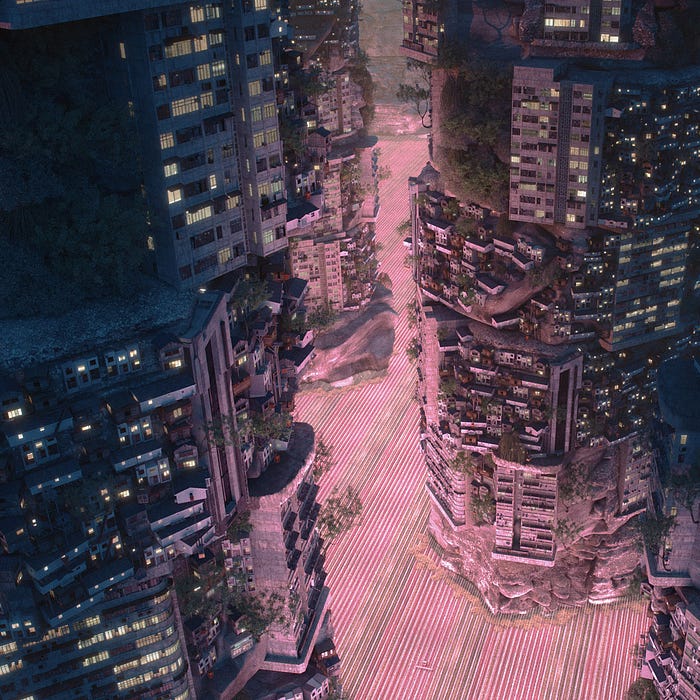
Liam Young’s Planet CitySpeculative design has transformed from an academic niche into a global practice reshaping how industries, governments, and cultural institutions imagine futures. This field — encompassing design fiction, critical futures, worldbuilding, and experiential scenarios — now influences everything from climate policy to AI ethics to urban planning. The discipline’s growth reflects a broader cultural shift: as accelerating technological and environmental change makes the future increasingly uncertain, designers have become essential guides for navigating possibility.
This guidebook maps the contemporary landscape of speculative design for educators, practitioners, and curious newcomers. It surveys the studios creating immersive future scenarios, the theorists shaping discourse, the aesthetic movements visualizing alternative worlds, and the educational pathways into this expanding field.
Superflux: Experiential futures at scale
Superflux, founded by Anab Jain and Jon Ardern in London in 2009, has become the field’s most visible practice. Both founders trained under Dunne & Raby at RCA and were awarded Royal Designers for Industry status in 2022 — the first practitioners recognized specifically for speculative design. Their work creates visceral encounters with possible futures through immersive installations.
The studio’s signature project, Mitigation of Shock (2017–ongoing), transforms gallery spaces into lived-in apartments from London circa 2050, complete with DIY hydroponics, insect farms, and survival manuals — materializing climate adaptation futures visitors can physically inhabit. Their Refuge for Resurgence (Venice Biennale 2021) staged a multispecies banquet imagining coexistence after ecological crisis. Clients range from Google AI and DeepMind to the UN Development Programme and the UK Cabinet Office.
Website: superflux.in
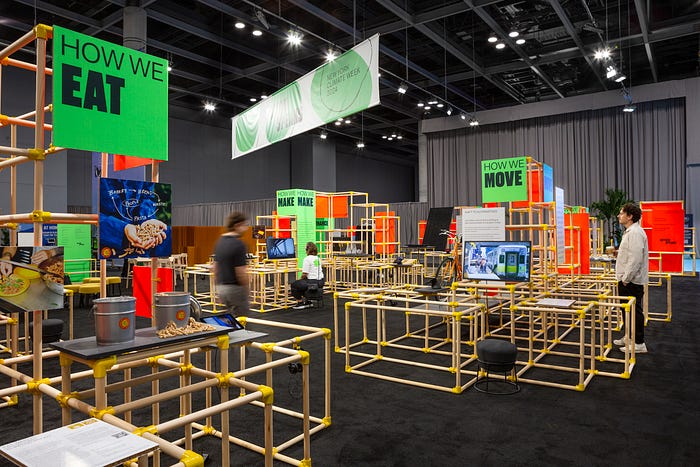
A modular, adaptable and fully circular exhibition that charts the multifarious business transformations paving the way for positive climate action today.
Near Future Laboratory: Design fiction’s methodological home
Near Future Laboratory, founded by Julian Bleecker in 2005 and now operating from Venice Beach with collaborators including Nicolas Nova, Fabien Girardin, and Nick Foster, established design fiction as a rigorous professional practice. Bleecker’s 2009 essay “Design Fiction: A Short Essay on Design, Science, Fact and Fiction” remains foundational, and the studio’s Manual of Design Fiction (2022) has become the canonical practitioner reference.
Their most influential artifact, the TBD Catalog (2014), presents 166 mundane consumer products from a “normal, ordinary, everyday near future” — AI-by-the-hour lawyers, dream-recording pillows, IoT toilets — demonstrating how design fiction makes abstract technological trajectories tangible through familiar objects. The catalog’s 10th anniversary edition appeared in 2024.
Website: nearfuturelaboratory.com
Extrapolation Factory: Democratizing futures
Extrapolation Factory, founded by Elliott Montgomery and Chris Woebken in Brooklyn in 2012, pioneered participatory approaches that bring futures thinking to non-expert publics. Their breakthrough 99¢ Futures project placed speculative products in actual dollar stores across New York, transforming everyday retail into a space for public futures discourse.
The studio’s Extrapolation Factory Operator’s Manual provides eleven futures modeling tools designed for collaborative workshops. They won the Lexus Design Award Grand Prix in 2018 and have partnered with UNICEF, Walker Art Center, and TED Active. Their work demonstrates that speculative design need not remain in galleries — it can meet people where they already are.
Website: extrapolationfactory.com

Tellart: Strategic speculation for institutions
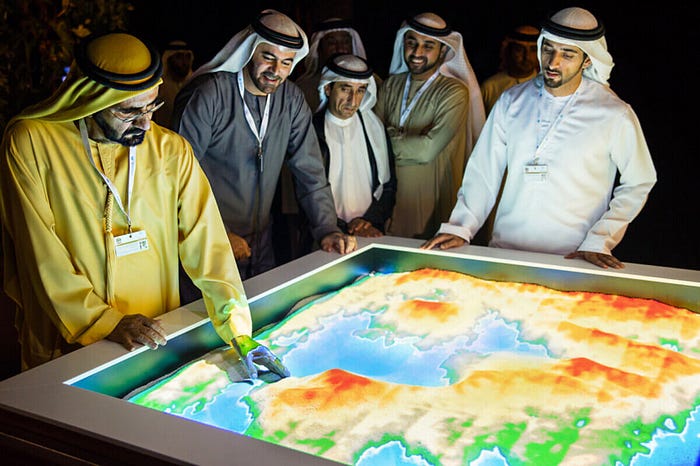
Tellart, operating since 2000 with headquarters now in Amsterdam, bridges speculative design and institutional transformation. Their exhibitions for the World Government Summit in Dubai directly inspired the creation of the UAE’s Museum of the Future. At COP28, their Dinner in 2050 project used AI-powered speculative dining to help delegates imagine climate-resilient food futures.
The studio describes its approach as “life-centric” — designing not just for humans but for all living systems. Clients include the V&A, World Economic Forum, and Van Gogh Museum.
Website: tellart.com
Automato: Algorithmic everyday life
Automato.farm, formed in Shanghai in 2015 by Simone Rebaudengo, Matthieu Cherubini, Saurabh Datta, and Lorenzo Romagnoli, explores how algorithmic systems shape domestic life. Their Addicted Products imagines appliances with their own needs; Ethical Things creates a smart fan that crowdsources moral decisions from online workers.
The collective’s work has appeared at Vitra Design Museum, MAK Vienna, and Triennale Milano, winning the IoT Award 2016 for Design Fiction. Rebaudengo also serves as an associate of Near Future Laboratory.
Website: automato.farm

Emerging collectives reshaping the field
Nonhuman Nonsense (Berlin/Stockholm), founded by Leo Fidjeland and Linnea Våglund, represents a new generation centering posthuman perspectives. Their Pink Chicken Project proposes genetically modifying all chickens pink using gene drive, creating a visible geological marker of the Anthropocene. Work has been presented at the UN Convention on Biological Diversity.
Marshmallow Laser Feast (London) creates multi-sensory immersive experiences exploring perception and nature. Projects like We Live in an Ocean of Air (Saatchi Gallery) and In the Eyes of the Animal (VR forest from animal perspectives) won the Wired Innovation Award for Experience Design.
Protopia Futures, led by Monika Bielskyte, advocates for proactive prototyping of inspiring, livable futures as alternatives to both dystopia and naive utopianism — she has traveled to over 100 countries researching diverse cultural approaches to futures.
Liam Young and Unknown Fields Division
Liam Young, an Australian architect based in Los Angeles, has been called “the man designing our futures” by the BBC. He runs both the MA in Fiction and Entertainment at SCI-Arc and the nomadic research collective Unknown Fields Division (with Kate Davies).
Unknown Fields organizes expeditions to extreme landscapes — rare earth mining sites, radioactive lakes, e-waste cities — documenting the hidden geographies behind consumer technologies. Young’s speculative film Planet City (2020) imagines all ten billion humans concentrated in a single hyper-dense metropolis, surrendering the rest of Earth to wilderness. His work resides in collections at MoMA, the Met, and the V&A.
In the Robot Skies (2016) was the first narrative film shot entirely by drones; Where the City Can’t See (2016) was the first fiction film using LIDAR scanning. Young represents architecture-as-worldbuilding — using the tools of film, documentary, and speculative narrative rather than traditional practice.
Website: https://liamyoung.org/
Alex McDowell and World Building Institute
Alex McDowell, the production designer behind Minority Report (2002), Fight Club, and Man of Steel, transformed film production design into a legitimate futures methodology. His work on Minority Report — collaborating with MIT scientists to imagine 2054’s gestural interfaces, personalized advertising, and predictive policing — influenced over 100 actual technology patents.
McDowell now directs the World Building Media Lab at USC, training students in narrative-driven world creation. His “World Building” approach treats environments as design substrates from which multiple stories can emerge, applicable to film, games, corporate strategy, and policy planning.
Website: https://worldbuilding.usc.edu/
Foundational figures
Anthony Dunne and Fiona Raby established speculative design as a recognized discipline through their teaching at RCA’s Design Interactions program (2005–2015) and their book Speculative Everything (2013). They coined “critical design” and popularized “speculative design,” developing the A/B Manifesto contrasting problem-solving (A) with problem-finding (B) approaches. Now University Professors at The New School/Parsons in New York, they continue shaping the field through their Designed Realities Studio. Their forthcoming book Not Here, Not Now (MIT Press, 2025) extends their thinking beyond future-oriented framing.
Bruce Sterling, science fiction author and cultural critic, coined “design fiction” in his 2005 book Shaping Things, defining it as “the deliberate use of diegetic prototypes to suspend disbelief about change.” His intellectual bridging of science fiction and design practice legitimized speculation as a professional methodology.
Julian Bleecker operationalized design fiction through Near Future Laboratory, creating the practical frameworks and artifacts that moved the concept from theory to practice. His original essay remains the field’s most-cited methodological text.
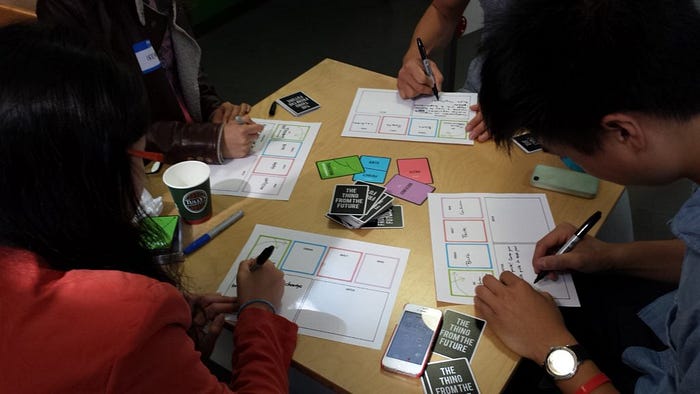
Stuart Candy pioneered “experiential futures” — making possible futures tangible through immersive scenarios rather than just objects. His framework treats futures as things to be lived rather than merely described. The card game The Thing From The Future (co-created with Jeff Watson) has become the field’s most widely-used imagination tool, with over 3.7 million possible prompts. Candy has held positions at Carnegie Mellon, Parsons, and currently serves as Outstanding Visiting Professor at Tec de Monterrey.
Contemporary practitioners across disciplines
Anab Jain (Superflux) has developed “More-Than-Human Centred Design,” expanding speculation beyond anthropocentric frames. She holds a professorship at the University of Applied Arts, Vienna, and received an Honorary Doctorate from University of the Arts London.
James Auger, now at École normale supérieure Paris-Saclay, produced some of critical design’s most provocative works through Auger-Loizeau, including Carnivorous Domestic Entertainment Robots — devices that trap and digest flies using microbial fuel cells. His scholarly writing, particularly “Speculative Design: Crafting the Speculation” (2013), formalized the field’s methodology.
Alexandra Daisy Ginsberg explores synthetic biology’s implications for design, authoring Synthetic Aesthetics (MIT Press, 2014) and creating Designing for the Sixth Extinction — speculative organisms engineered to support endangered species. Her PhD, Better, critically examined synthetic biology’s uncritical optimism.

Theorists and critics
Cameron Tonkinwise has become the field’s most cited critic, questioning speculative design’s political limitations and calling for more engaged practice. Bruce and Stephanie Tharp introduced “discursive design” as a unifying framework for critical, speculative, and adversarial approaches. Matt Malpass provided systematic taxonomies in Critical Design in Context (2017). Jeffrey and Shaowen Bardzell brought critical design into HCI discourse through influential CHI papers.
Emerging voices expanding the field
Deepa Butoliya develops “Post Normal Design” frameworks emphasizing decolonial and intersectional perspectives. Johanna Hoffman applies speculative futures to urban resilience. Rewa Wright (Māori/Aotearoa) brings Indigenous and cyberfeminist approaches to speculative practice. Phil Balagtas founded the Design Futures Initiative and Speculative Futures meetup network, building global community infrastructure.
Exhibitions that defined the discipline
United Micro Kingdoms (Dunne & Raby, 2012–2013), commissioned by London’s Design Museum, remains the most ambitious speculative design exhibition ever mounted. It imagined the UK fractured into four self-contained “super-shires” — Digitarians, Bioliberals, Anarcho-evolutionists, and Communo-nuclearists — each with distinct political and technological systems materialized through films, objects, maps, and transportation designs.
Mitigation of Shock (Superflux, 2017–ongoing) pioneered the “future apartment” format, creating fully-realized domestic spaces visitors can inhabit. The installation — featuring DIY food production, water recycling, and survival protocols — has traveled from Barcelona to Singapore, demonstrating how experiential futures can viscerally communicate climate adaptation challenges.
Refuge for Resurgence (Superflux, Venice Biennale 2021) staged a banquet table where humans sit alongside foxes, pigeons, and insects, materializing multispecies futures thinking in architecturally-scaled installation.
Design fiction artifacts
The TBD Catalog (Near Future Laboratory, 2014) demonstrated design fiction’s power through mundane consumer products: AI services, quantified-self devices, and IoT appliances presented with the deadpan ordinariness of actual mail-order catalogs. The 10th anniversary edition (2024) remains the canonical design fiction artifact.
Minority Report’s production design (Alex McDowell, 2002) established film as a legitimate space for speculative prototyping. The gestural interface created for the film led to actual development contracts and patents, demonstrating how “diegetic prototypes” can influence real technology trajectories.
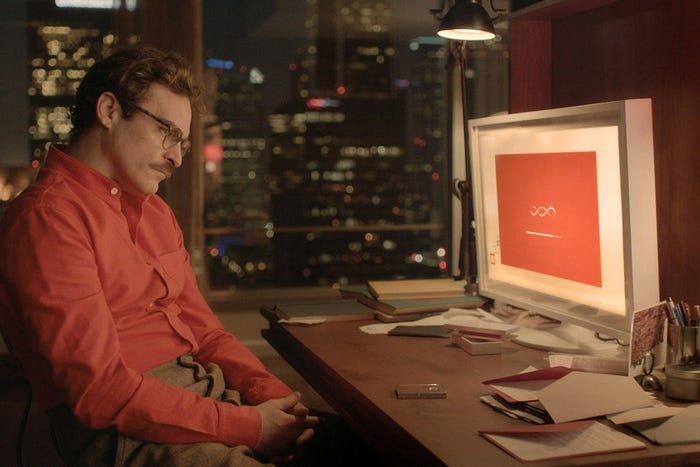
Her (Spike Jonze, 2013) provides another model: its near-future world is populated with believable everyday technologies — wireless earbuds, ambient computing, AI assistants — integrated so seamlessly into narrative that they feel inevitable rather than spectacular.
Games as speculation tools
The Thing From The Future (Stuart Candy and Jeff Watson, 2014), a 108-card imagination game, has been played at UNESCO Youth Forums, SXSW with U.S. mayors, and in corporate strategy sessions worldwide. Players generate prompts combining future Arcs (Grow, Collapse, Discipline, Transform), Terrains, Objects, and Moods, then describe artifacts from those possible worlds. The Association of Professional Futurists recognized it as Most Significant Futures Work in 2015.
Tabletop games like The Quiet Year (Avery Alder), The Ground Itself (Everest Pipkin), and Microscope (Ben Robbins) have developed worldbuilding as collaborative play, influencing how speculative designers think about participatory futures.
Design fiction: Making futures tangible
Design fiction creates artifacts from possible worlds to provoke discussion about futures. Key principles include:
- Diegetic prototyping: Objects that exist within story worlds, functioning as “totems through which a larger story can be told.” The term comes from film theorist David Kirby, who studied how science consultants create believable technologies for cinema.
- The future mundane: Focusing on everyday objects rather than spectacular technologies, because the most telling futures emerge in banal details — not flying cars, but how people buy groceries.
- Discursive spaces: Design fictions succeed not by predicting futures but by creating spaces for conversation about possibilities.
The speculative–critical distinction
Critical design (coined by Anthony Dunne, 1999) uses design to “challenge narrow assumptions, preconceptions and givens about the role products play in everyday life.” It’s more attitude than method — employing satire, deadpan humor, and provocation.
Speculative design specifically concerns future scenarios and “what if?” questions. The Dunne & Raby A/B Manifesto contrasts these orientations: A (affirmative design) solves problems, provides answers, and serves industry; B (speculative design) finds problems, asks questions, and serves society.
The distinction has blurred in practice. Related terms now include discursive design, adversarial design, interrogative design, and design for debate — all sharing a commitment to design as inquiry rather than solution.
Worldbuilding methodologies
Worldbuilding — creating coherent fictional realities — draws on frameworks from transmedia studies:
- Klastrup and Tosca’s Three Dimensions: Topos (setting, geography, physical/social laws), Ethos (moral framework), and Mythos (central stories and legends)
- Negative capability: Strategic gaps that invite audience imagination
- Transmedia scalability: Designing worlds that can sustain multiple stories across platforms
Mark J.P. Wolf’s Building Imaginary Worlds (2012) provides the theoretical foundation; Alex McDowell’s World Building Institute applies these principles to film, games, and strategic futures.
Futures studies methods
Speculative designers draw extensively on strategic foresight:
- The Futures Cone (Joseph Voros): Visual representation distinguishing possible, plausible, probable, and preferable futures
- Scenario planning: Developing multiple narrative futures, typically using two-axis frameworks creating four contrasting scenarios
- Horizon scanning: Systematic detection of emerging trends and “weak signals”
- The Futures Wheel (Jerome Glenn, 1971): Mapping cascading consequences from central changes
These methods provide structured approaches for imagining what speculative design then materializes.
Object-oriented ontology and design
Object-Oriented Ontology (OOO), developed by Graham Harman, rejects human exceptionalism: objects exist independently of human perception or access, and no object can be fully grasped. Timothy Morton’s “hyperobjects” — phenomena so distributed in time and space they transcend localization, like climate change or nuclear radiation — have become crucial conceptual tools for designers grappling with planetary-scale challenges.
New materialism (Karen Barad, Jane Bennett) emphasizes material agency: things are not passive recipients of human intention but have “positive, productive power of their own.” These philosophical frameworks support the shift from human-centered to more-than-human design.

Aesthetic movements visualizing alternative futures
Solarpunk: The optimistic resistance
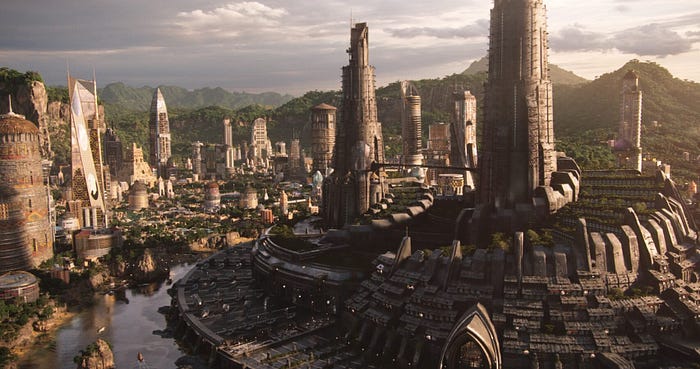
Solarpunk envisions sustainable futures where renewable technology integrates with nature and community. The aesthetic emerged around 2014 through Tumblr artists and gained momentum as resistance to “dystopia fatigue.” Visual characteristics include Art Nouveau influences, organic architecture (think Frank Lloyd Wright meets vertical forests), and technology-nature synthesis.
Key references include Studio Ghibli films, Boeri Studio’s Bosco Verticale in Milan, and Wakanda’s design in Black Panther. Solarpunk functions as both aesthetic movement and activist toolkit — proposing not just images but practices for preferable futures.
Lunarpunk offers the “yin to solarpunk’s yang” — nocturnal, spiritual, individualistic futures featuring bioluminescence, fungi, and dark flowing garments. The 2023 anthology Bioluminescent formalized this emerging aesthetic.
Hopepunk, coined by Alexandra Rowland in 2017, emphasizes “weaponized optimism” — characters fighting for positive change through kindness and collective action rather than cynicism. It entered Collins English Dictionary in 2022.
Afrofuturism and its expansions
Afrofuturism, theorized by Mark Dery in 1993, explores African diaspora culture’s intersection with technology and speculation. Rooted in Sun Ra’s cosmic jazz performances and Octavia Butler’s visionary fiction, it found mainstream visibility through Black Panther (2018).
Contemporary Afrofuturist designers and artists include Wangechi Mutu, Cyrus Kabiru, Lauren Halsey, and musicians from Janelle Monáe to Erykah Badu. The Smithsonian’s National Museum of African American History and Culture mounted “Afrofuturism: A History of Black Futures” as major exhibition.
Writer Nnedi Okofor distinguishes Africanfuturism as specifically rooted in African (rather than diasporic) perspectives — a reminder that these categories continue evolving.
Indigenous Futurisms
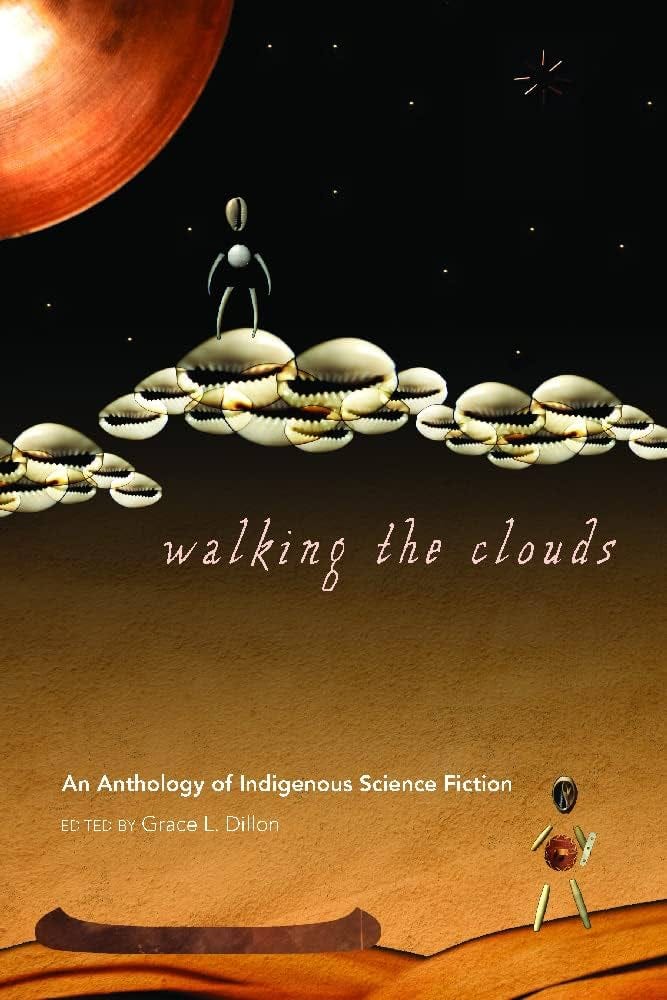
Indigenous Futurisms, formalized by Grace Dillon’s anthology Walking the Clouds (2012), express Indigenous perspectives on time, technology, and speculation. Key concepts include non-linear temporality (past/present/future interconnected) and the recognition that post-apocalyptic scenarios are already reality for communities that survived colonization.
Practitioners include Skawennati (Mohawk), Elizabeth LaPensée (Anishinaabe/Métis), Santiago X (Coushatta/Chamoru), and Dennis Numkena (Hopi), described as “the first Indigenous Futurist in architecture.” Institutions like the Center for Native Futures (Chicago) and Initiative for Indigenous Futures support this expanding practice.
Gulf Futurism
Gulf Futurism, coined by Sophia Al-Maria and Fatima Al Qadiri in 2012, examines how Western cyberpunk futures are already manifest in the Persian Gulf’s petro-capitalist present. The concept captures the “quantum leap” between Bedouin nomadic life and hyper-modern consumer culture within a single generation.
Al-Maria’s work includes “Black Friday” (Whitney Museum) and the memoir The Girl Who Fell to Earth. The aesthetic emphasizes gleaming skyscrapers, air-conditioned mega-malls, and the contradictions between luxury development and exploited labor.
Hauntology and liminal aesthetics
Hauntology, adapted from Jacques Derrida by critic Mark Fisher, describes cultural stagnation — society “haunted” by lost futures and unable to generate genuinely new forms. The aesthetic manifests in Ghost Box Records artists sampling 1960s British public information films and in the pervasive sense that contemporary culture recycles rather than invents.
Liminal space aesthetics emerged from internet culture, particularly the 2019 “Backrooms” phenomenon: images of empty transitional spaces — abandoned malls, vacant hotels, deserted pools — evoking nostalgia and unease. These aesthetics provide visual languages for temporal disjunction and the “slow cancellation of the future” Fisher diagnosed.
AI-generated aesthetics
The explosion of generative AI tools (Midjourney, DALL·E, Stable Diffusion) since 2022 has created distinct aesthetic tendencies: hyper-detailed rendering, cinematic lighting, dreamlike juxtapositions — and a concerning tendency toward generic retrofuturism that may narrow rather than expand speculative imagination.
Practitioners debate whether AI accelerates speculation (enabling rapid visualization) or undermines it (defaulting to familiar futures). Ethical concerns include training data sourced without consent and the risk of what critic Boris Müller calls “algorithmic kitsch” — visually impressive but intellectually empty futures.
Educational pathways into speculative practice

Graduate programs
SCI-Arc Fiction and Entertainment (Los Angeles), directed by Liam Young, offers a 1-year MS embedded in LA’s entertainment industry. Students work with Framestore, Disney Imagineering, and Netflix, with graduate work premiering at Sundance and Tribeca. This program most directly trains speculative designers for film, games, and immersive media.
Royal College of Art (London) remains historically central, though Design Interactions closed when Dunne & Raby departed in 2015. Current programs include Design Futures MDes and Information Experience Design MA, continuing critical and speculative traditions through faculty like John V Willshire and connections to alumni like Superflux’s founders.
Carnegie Mellon’s PhD in Transition Design integrates speculative methods within a framework for addressing “wicked problems” and catalyzing sustainable transitions. Faculty include Terry Irwin, Cameron Tonkinwise, and Gideon Kossoff.
Parsons School of Design offers a Futures Studies and Speculative Design Certificate (online, ~$1,760), accessible professional training in scenario planning and design fiction with faculty including Elliott Montgomery from Extrapolation Factory.
Design Academy Eindhoven houses the Critical Inquiry Lab and Social Design MA, emphasizing research-based design for public activation. IAAC/ELISAVA Barcelona’s Master in Design for Emergent Futures combines speculation with digital fabrication and Fab Academy integration.
Workshops and alternative education
The School of Critical Design (founded by J. Paul Neeley) offers online courses from self-paced basics to advanced masterclasses, making speculative methods accessible globally. CIID Summer Schools provide 5-day intensives on topics like “Designing Ethical Futures.”
The Speculative Futures network, founded by Phil Balagtas through the Design Futures Initiative, operates 70+ local chapters worldwide — Berlin’s chapter alone has 2,000+ members. Quarterly meetups, workshops, and the annual PRIMER Conference provide peer learning outside academic structures.
Residencies
Eyebeam (Brooklyn) has supported artists working with technology since 1998; their 2025/2026 “Speculating on Plurality” program offers $4,000 stipends for emerging artists. Microsoft Research Artist in Residence brings artists into science-technology environments. Google X maintains internal speculative design practice using design fiction for “moonshot” technologies — Nick Foster, Near Future Laboratory co-founder, serves as Head of Design.
\\Essential texts
- Speculative Everything (Dunne & Raby, MIT Press, 2013): The foundational text defining the field
- The Manual of Design Fiction (Near Future Laboratory, 2022): Practical methodology guide
- Discursive Design (Bruce & Stephanie Tharp, MIT Press, 2018): Expanded theoretical framework
- Building Imaginary Worlds (Mark J.P. Wolf, Routledge, 2012): Worldbuilding theory
- Synthetic Aesthetics (Ginsberg et al., MIT Press, 2014): Design and synthetic biology
- Designs for the Pluriverse (Arturo Escobar, Duke, 2018): Decolonial design approaches
\\Journals and magazines
Design Issues (MIT Press) and She Ji (Tongji/Elsevier) publish academic speculative design research. Journal of Futures Studies bridges foresight and design communities. Dezeen, Core77, and CLOT Magazine cover speculative projects for broader audiences. Ding Magazine offers futures-focused interviews and essays.
\\Conferences and festivals
Ars Electronica (Linz) and Transmediale (Berlin) are primary venues for art-technology-speculation intersection. Dutch Design Week (Eindhoven) and Milan Design Week feature speculative exhibitions. Academic venues include CHI and DIS (ACM conferences), Design Research Society Conference, and Nordes (Nordic Design Research).
\\Climate and ecological futures
Climate speculation has become central to contemporary practice. Superflux’s “Mitigation of Shock” and “Invocation for Hope” make climate adaptation viscerally experiential. Design Earth (Rania Ghosn and El Hadi Jazairy) produces architectural fictions like The Planet After Geoengineering graphic novel. The shift from dystopian warning to “active hope” narratives reflects the field’s evolution toward inspiring collective action.
\\AI and algorithmic futures
As AI capabilities accelerate, speculative designers increasingly explore algorithmic implications. Near Future Laboratory’s AI Designed Fictions Research Studio prototypes everyday AI artifacts; Automato’s work imagines domestic life shaped by machine logic. The emergence of generative AI as both subject and tool of speculation creates recursive challenges the field is still working through.
\\Biotechnology and synthetic biology
Alexandra Daisy Ginsberg’s “Designing for the Sixth Extinction” imagines synthetic organisms supporting endangered ecosystems. The Synthetic Aesthetics project brought designers and biologists together to prototype biological computers and bacterial textiles. Central question: what does it mean to “design nature”?
\\Post-human and more-than-human
Superflux’s “More-Than-Human Centred Design” framework, influenced by OOO and new materialism, expands speculation beyond human needs to encompass other species, ecosystems, and objects. This represents the field’s most significant theoretical development since Dunne & Raby’s original critical design framework.
\\Critical perspectives and ongoing debates
The field faces persistent critiques. Cameron Tonkinwise and others question speculative design’s political efficacy: does provocative gallery work actually change anything, or merely comment? Critics identify Eurocentric bias — the field emerged from London institutions and remains concentrated in wealthy Western contexts. Calls for decolonial approaches, diverse futures representation, and engagement with Global South perspectives continue reshaping practice.
The relationship between speculation and action remains contentious. Some practitioners emphasize design fiction’s discursive value — opening conversations, not providing solutions. Others push toward “speculative activism” that connects imagination to material change.
The arrival of generative AI raises new questions about human creativity, authorship, and whether algorithmic tools will expand or constrain speculative imagination. The field’s next chapter will likely be shaped by how practitioners navigate these tensions between critique and construction, gallery and public, human and posthuman perspectives.
\\Speculation as essential practice
Speculative design has matured from a provocative academic experiment into essential infrastructure for navigating uncertain futures. Its methods — design fiction, experiential scenarios, diegetic prototyping — are now deployed by governments exploring policy options, corporations imaging product trajectories, and cultural institutions engaging publics with climate, AI, and biotechnology challenges.
The field’s most significant contribution may be its insistence that futures are designed — that the images, objects, and narratives shaping collective imagination are not neutral but carry values, assumptions, and political implications. In making this visible, speculative design creates space for intervention: if futures are designed, they can be redesigned.
For educators, this survey provides entry points across theory, practice, and aesthetics. For practitioners, it maps the contemporary landscape and its debates. For anyone curious about how design might help navigate accelerating change, speculative design offers both methods and examples — not predictions of what will happen, but provocations about what could.
The future remains unwritten. Speculative design helps us draft.